

How I run my life as a neurodivergent freelancer 🧠
Running a business that works with my brain

Hi friends,
This post will reveal the inner workings of my neurodivergent brain. Specifically, how I run Fighting Talk.
Reminder: you can listen to this article!
For the podcast experience, hit the “play” button or use the voiceover function.
Today, you’ll get a glimpse into how I organise my life to:
limit stress,
make space for joy,
do work that matters to me, without ending up in hospital from burnout1.
I’ll share the steps that help me handle the chaos, including:
Routines
Get to know yourself
Taking your health seriously
Resisting urgency
Prioritising rest
Serotonin top-ups
I’ve included a bunch of recommended resources (like books and templates). Plus, a list of my favourite tools at the end.
January is a weird time for new starts, in my opinion. (To all my Persian, Hindu, Pagan readers who celebrate new year when there is actual new life and sunshine outside? You’ve got it right.)
But then again, the fresh start effect is real. It may be a dark, freezing and never-ending month. But January is the start of something new. At least, it is where I am.
So if you’re ready for a New Year New Me TM, or you just want to tweak the way you run your business this year, I hope you’ll find some handy tips to help you in 2025.2
1. Find a routine that works for you
I love routine. I hate routine. I desperately need routine. I can’t follow a routine.3
Neurodivergent folks often struggle with routine. For instance, a lot of autistic people value having a reliable schedule, while the repetition might make it tricky for ADHDers to stick to.
AuDHDers (people who are both autistic and ADHD) may find themselves caught between 2 extremes: I desperately crave routine (I need it to function!). And I find it almost impossible to maintain one.

AuDHDers may find themselves caught between 2 extremes; I desperately crave routine (I need it to function!). And I find it almost impossible to maintain one.
Here’s how I craft The Perfect Routine
Spend ages creating a routine, telling myself that it’ll really work this time.
Lean in hard to my perfectionist streak, stressing out about ticking off every single item every single day (for maybe 9 days)
Drop the routine completely. Feel awful about it. Call myself a failure. Sob.
Then I repeat steps 1 to 3 (I’ve been doing this for roughly 23 of my 34.5 years on earth, but you can choose the timeframe that suits you best).
Tip: create a menu
In 2024, I feel like I cracked the cycle.
By creating menus.
I list optional parts of my morning routine, which allows me to break free of perfectionism and maintain habits that set me up nicely for the day.
Here’s an example:
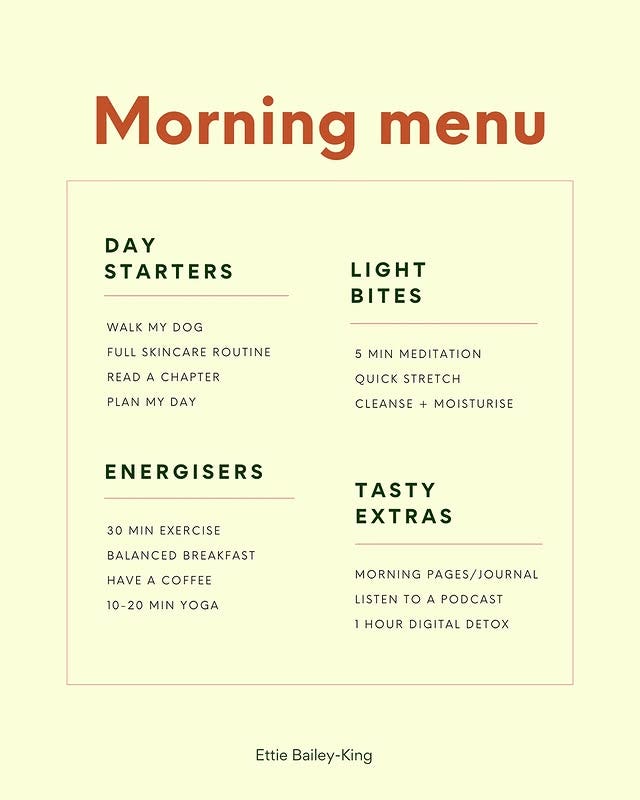
My evening menu has a few options that help me relax and get ready to sleep. For example:
Light a candle or put some lavender oil in an oil diffuser
Switch on my Galaxy light4
Why does this work for me?
I don’t have to order the whole menu - I choose what I feel like.
I get the spontaneity my ADHD longs for. I sidestep Pathological Demand Avoidance (PDA) - otherwise known as Persistent Drive for Autonomy.6
The idea of a morning/evening menu was just one of many awesome tips I picked up from working with health coach Nena Foster. Thank you Nena!
I don’t have to order the whole menu - I choose what I feel like.
Tip: create rituals
Switching from rest mode to work mode (and back again) can be tough.
Rituals can help signal a shift.7
These anchors can make transitions feel much less jarring.
To tell your body, “Good job, you’re done for the day!” you could:
Close down all browser tabs (yes, all 1,326 of them)
Set a timer for 2 minutes and clear your desk
Write down a win for the day
Say something out loud (like “that’s my work done for the day - everything else can wait until tomorrow”)
Do something physical (if it’s available to you, you could walk, punch the air, jump around, dance for 30 seconds)
Swap your shoes for slippers
Wash away the day (literally: have a shower or bath, figuratively: change your clothes, your space or your lighting)
Change context (if you work from the same kitchen table where you’re about to eat dinner, maybe you can pack up your laptop and do a mini commute. You could even walk out of your house and round the block).
I’m obsessed with the app Llama Life. I use it to create to-do lists and make them feel “real” by setting timers.
Llama Life also has a “preset” function where you can create a set of steps. I have one named “end of day ritual.” It takes me 2 seconds to load it, then it prompts me to go through my end of day actions, tick them off, and bask in the dopamine of completing these tasks.
Recommended tool: Llama Life
Setting rituals as you start or finish work helps to signal a shift in activity, serving as a cue for your brain. Anchors can make transitions feel much less jarring.
2. Get to know yourself
Learn about yourself as much as possible - with curiosity, not judgment.
What gives you energy?
What tires you out?
What creates stress for you?
What helps you recharge?
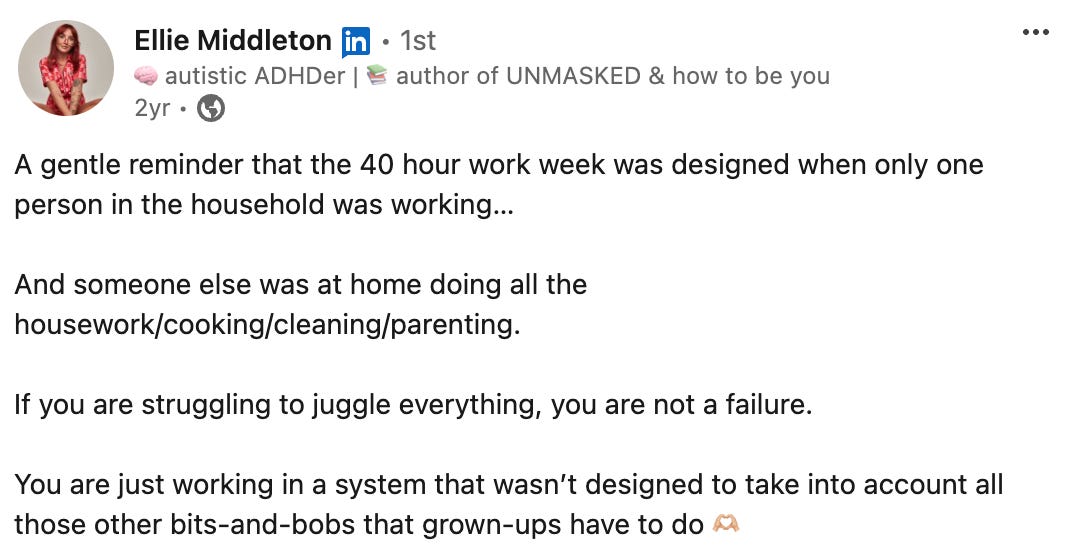
It doesn’t matter what other people can do. It matters what you can do.
It doesn’t matter when other people do their best work. It matters when you do.
I could go on, but you get the point.
I can work 14 hours a day, and often do, but they’re not quality hours of work. So am I actually working?
I simply can’t get 8 good hours of work done in one day, without breaks.
And that doesn’t make me lazy or bad.
“The Laziness Lie is a deep-seated, culturally held belief system that leads many of us to believe the following: Deep down I’m lazy and worthless. I must work incredibly hard, all the time, to overcome my inner laziness. My worth is earned through my productivity. Work is the center of life. Anyone who isn’t accomplished and driven is immoral.”
- Devon Price, Laziness Does Not Exist
The truth is: there’s nothing wrong with you.
It just means you haven’t found an environment that works for you, or a task that excites you.
If you can do 3 or 4 hours of quality work in a day, that’s amazing. Do that. Then stop.
Take an actual break.8 I’ll come back to this later in the section on rest but for now, no matter how much you’re resting, I think you need to rest more.
There’s nothing wrong with you if you can’t get stuff done. It just means you haven’t found an environment that works for you, or a task that excites you.
Tip: find when you’re at your best
When do you create your best work?
Is there a specific time of day when replying to emails feels more manageable?
We all have natural rhythms to our days, weeks, and months.
For example:
you might be more creative at night
Monday mornings might feel like a good time for admin
your energy levels might be lowest during the luteal phase of your menstrual cycle
Some days, you may be able to do 6 hours of work - other days, you can't do anything.
The more you push up against it and try to force yourself to get through, the more you probably just need to rest.
Recommended resource: Dan Pink’s daily “when” tracker
Recommended app: Flo (period tracker) or Stardust ✨ (period and moon phase tracker).
Tip: learn how you process
Learning how you process information - and understanding what your communication preferences are - is key.
The better you know yourself, the better you can do your job.
For instance, I hate emails.
I still have to send them, but I try to limit their role in my life.
Since I process ideas best by talking out loud (to myself or other people) I also structure my days, weeks and months to give me plenty of opportunities to do that.
Monthly financial review? That’s a call, where I go through my finances live, with my accountability partner.
Major project milestones? I’m not sending over a big email to clients. That’s a call, where I talk them through my latest findings, live.
Not everything has to be a call (particularly as I find phone and video calls really exhausting).
But I’d still choose a clear, structured, purposeful call over a long email or Google Doc any day.
How do you like to process complex information? What helps you get clear on next steps? What’s your ideal way to learn new things?
The better you know yourself, the better you can do your job.
Figure out what works for you.
Maybe you:
enjoy going for walks with headphones on
like doing brain dumps with pen and paper
prefer written communication to process information at your own pace
need visual aids to understand complex information
thrive in structured meetings with a clear agenda
prefer to have regular check-ins
need space to process feedback privately before responding
prefer asynchronous communication (like recorded messages or emails) so you can respond when you’re ready
What helps you consolidate your knowledge? Which environments help you generate ideas?
Tip: If you’re not sure, keep a log over the next few days and weeks.
Set an alarm for every few hours. When it goes off, note down:
1. What am I doing right now? (For example, on a call, reading a long email or report). 2. How does it feel? It’s okay if you can’t tell right away (many neurodivergent people struggle with interoception). Pay attention to what you can feel in your body, how you’re behaving, whether you go to the gym after that in-person workshop or need to lie on the sofa for days to recover).
Tip: understand your sensory needs
l quickly alternate between sensory seeking, sensory inhibiting, and back to sensory seeking. Sound familiar? It goes like this:
I get so bored that it’s physically painful.
So, I’ll stick on a few minutes of extremely loud electronic music or try to watch a TV show while reading while cooking while texting.
Then, I become overstimulated - my brain completely shuts down and I need to lie in a silent, dark room.
To balance my sensory input, stimming is super helpful. It makes it easier to stay focused.
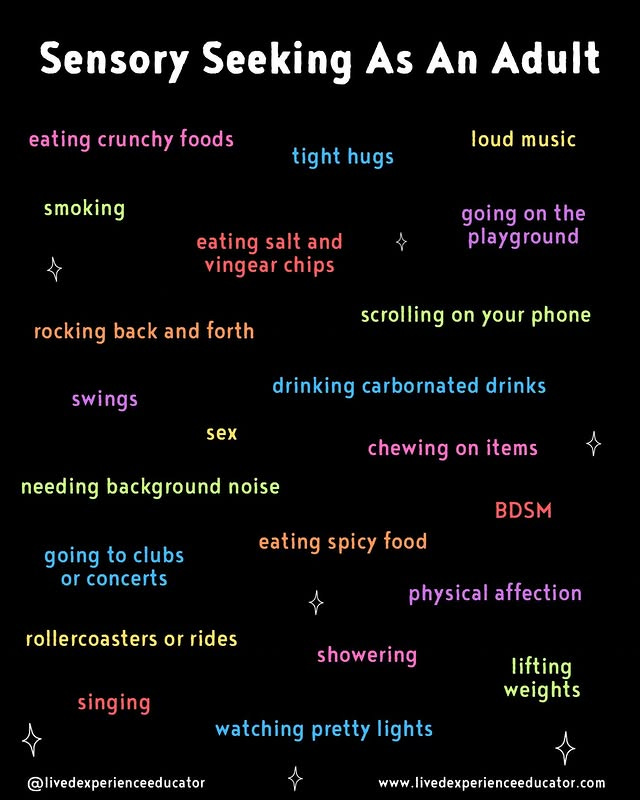
To balance my sensory input, stimming is super helpful. It makes it easier to stay focused.
Often, stimming is a repetitive movement like:
fidgeting
hair twirling
nail biting
Some stims are healthier than others. Drinking water, for example, can be one of the repetitive actions I do to soothe myself.
Theres a huge amount of shame directed at people who stim.9
There shouldn’t be.
Find a way to stim that feels right for you.
Slowly giving up my shame about stimming has been really helpful. Also: fidget toys are often adorable.
This is one of those joyful opportunities (and equally incredibly annoying part) of trying to manage your neurodivergent brain.
Recommended tool: Brain.fm - for music and sounds designed to help you focus.
Find a way to stim that works for you
Tip: create a Manual of Me
The more upfront you can be about your access needs, the better.
Of course, there is a huge privilege associated with:
being able to learn about your identities,
discovering what you need,
testing out accommodations,
being able to express your needs safely.10
So saying “I’m autistic,” or, “I need you not to interrupt me when I’m focused,” just might not be safe or realistic.
If you can, explaining what does/doesn’t work for you can model that way of working for others - inspiring more people to advocate for themselves.
If you can, explaining what does/doesn’t work for you can model that way of working for others - inspiring more people to advocate for themselves.
For example, I can focus pretty well on morning calls.
By 2pm, my attention dries up and I can’t process information accurately. I explain that in my manual.
(I also make it clear that fidgeting helps me pay attention - I’m not distracted!)
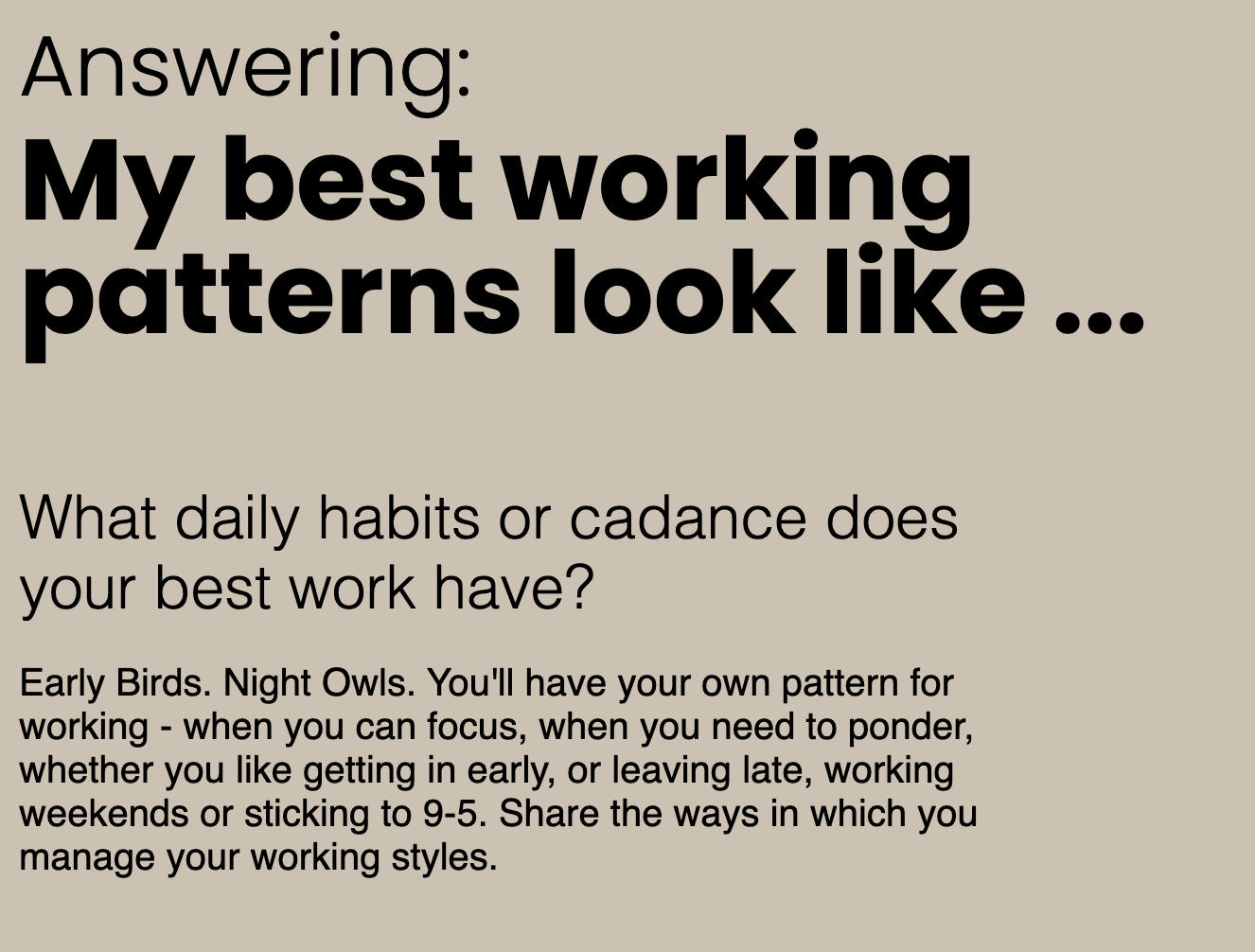
Recommended tool: Manual of Me
3. Take your health seriously
Sometimes, I’ll stare at my screen so intensely that suddenly 14 hours have passed and I haven’t:
eaten a crumb,
been to the toilet,
had a sip of water.
This is, in part, due to struggles with interoception.
Many neurodivergent people find it hard to know how we’re feeling, and we can be unaware of our physical needs.
You only get one body - and it deserves to be treated like the precious home that it is.
It can be incredibly difficult to know what you’re feeling. But you can get better at this!
When you notice you’re hungry, tired or thirsty (like the time I heard my tongue make a noise on the roof of my mouth, and realised I was probably dehydrated), don’t beat yourself up for not noticing.
Tip: Practice paying attention, with calm curiosity, to the signals your body is sending you.
You only get one body, and it deserves to be treated like the precious home that it is.
Tip: make your workstation ergonomic
“Ergonomic” might sound synonymous with “expensive”, but you don’t need to buy fancy equipment.
Keep it simple, but take it seriously.
For instance, you can use:
a stack of books to elevate your laptop/monitors to the right height
a cushion or rolled-up towel to support your lower back and encourage better posture
a footrest (sturdy box) if your feet don’t reach the floor
an improvised standing setup (if you don’t have a standing desk), using stacked boxes or an adjustable stand.
“Ergonomic” might sound synonymous with “expensive”, but don’t overthink it.
As someone who quickly gets pain, even if I'm sitting for a few minutes, I'm constantly fidgeting.
So, I recently treated myself to this rocking footrest and a custard cream biscuit fidget toy. Obsessed.
I’ve also found that a vertical mouse is helpful for my carpal tunnel syndrome (which lots of hypermobile people experience: many neurodivergent people have hypermobility).
Tip: drink. your. water.
Without a visual reminder, I might never drink water.11
So I get a big glass out every morning.
(That way, I can’t confuse it with the 14 others left on the side.)
Then I put a slice of fresh lemon or lime in it to *activate* the glass.
(Does that make sense? It’s a visual sign to myself that this glass is now in use).
Now that it's an “active” glass, I'm going to go and fill it.
When it gets empty, I'm going to refill it.
For me, that slice of lemon in the glass is a visual prompt that the glass wants needs to be refilled.
What might work for you?
Maybe a tiny glass of water remind you to get up to refill it all the time? (Dan Pink recommends this, as a way of staying active throughout the day).
Or perhaps a huge bottle with time markings or encouraging reminders on it?

Tip: learn about your health
This year, I was lucky enough to do health coaching with the wonderful Nena Foster.
One of the things I’m most grateful for is a list we created. Nena helped me make a list of actions to take when I’m stressed.
It’s full of thoughtful, sensible suggestions, like popping outside, having a drink of water, or eating a sandwich.
It sounds absurdly simple, but it does wonders for:
eliminating decision fatigue,
preventing me from going to town on a ton of sugary snacks to give me temporary energy,
giving me a quick way to ground myself,
helping me take a helpful action, when I don’t have the mental resources to decide what I need.
Obviously, not everyone can afford to pay for health coaching. The key point here is: learn what you can about your health.
One of the biggest eye-openers? Discovering what food works for my body.
For me, a breakfast with fat, protein and fibre is perfect for setting me up well for the day. Think: eggs with veggies, a breakfast burrito, full-fat yogurt with fruit.
For me, a breakfast with fat, protein and fibre is perfect for setting me up well for the day.
Nena also explained how neurodivergent people can have slightly different nutritional needs, like needing more zinc or magnesium.
I’m as far from being a doctor or nutritionist as you can get, so I won’t give medical advice. But I really recommend learning more about the connection between food and mood, or whatever symptoms affect you the most.
For example, learning about how omega 3s affect brain health helped me adjust my diet to improve my mood and focus.
Tip: reflect on what has helped your health in the past. What foods have helped you feel good? What behaviours improve your focus?
Tip: learn about stress
Learning how stress manifests in your body, and how to mitigate it, is something I wish I learned about sooner.
“You might notice yourself checking things, picking at things, thinking obsessive thoughts, or fiddling with your own body in a routinized kind of way. These are signs that the stress has overwhelmed your brain’s ability to cope rationally with the stressor.”
Stress can crop up in countless ways, and it can have a seriously harmful effect on your body.
The good news is: you can teach your body to recognise that it’s not in danger during/after a stressful situation.
How? By completing the stress response cycle.
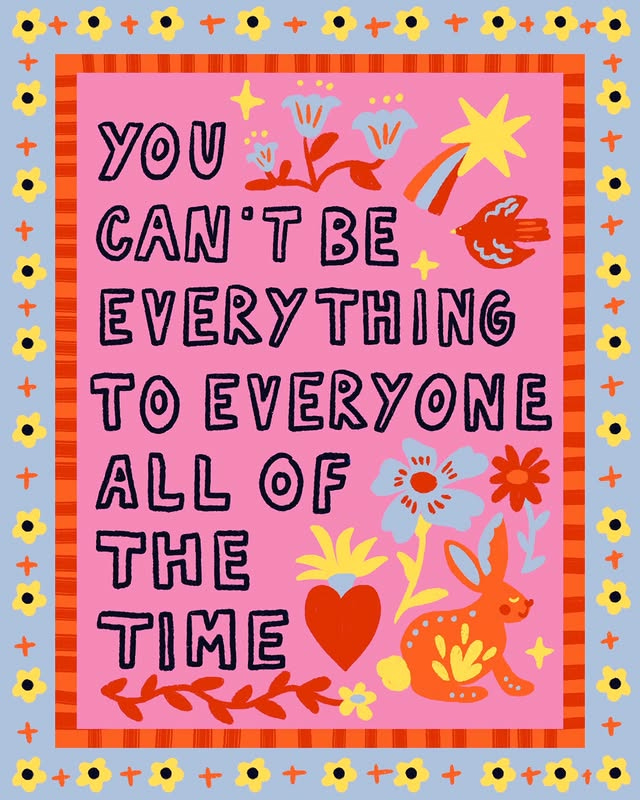
After an acute episode of stress (like having a high-pressure meeting), there are a bunch of different things you can do to tell your body it’s safe, like:
laughing
moving around or exercising
stretching
doing deep breathing
meditating
giving someone a long hug
They’re simple ways to tell your nervous system: don’t worry, we’re not running away from a tiger.
Book recommendation: Burnout by Emily & Amelia Nagoski
After an acute episode of stress (like having a high-pressure meeting), there are a bunch of different things you can do to tell your body it’s safe. For instance, you can laugh, move around, exercise, stretch, do deep breathing, meditate, or have a long old cuddle with someone.
4. Resist urgency
Busyness and hustle culture are oppressive.
They’re rooted in systems of racism, ableism, and white supremacy, which prize the idea that productivity equals worth.
These systems assume that non-disabled bodies and minds - those that can “perform” like machines - are the gold standard.
Unsurprisingly, this often caters to cis men and leaves little room for anyone who experiences the world differently.
“Reading productivity books by men is like gaslighting yourself. Their advice doesn’t reflect the realities of caregiving, hormonal shifts, or systemic barriers women face.” - @tamu.thomas
Busyness and hustle culture are oppressive. They’re rooted in systems of racism, ableism, and white supremacy, which prize the idea that productivity equals worth.
Neurodivergent people typically don’t operate on a constant, linear energy flow.
We’re often more variable - some days are high-energy, others are slower.
And for people who menstruate, our energy levels can fluctuate even more.
The hustle mindset doesn’t just ignore this; it actively punishes it.
It says: if you can’t keep up, you’re not good enough. That’s why, for me, challenging these systems isn’t just about rest - it’s about redefining what “success” looks like.
It’s about honouring how different bodies and minds work.
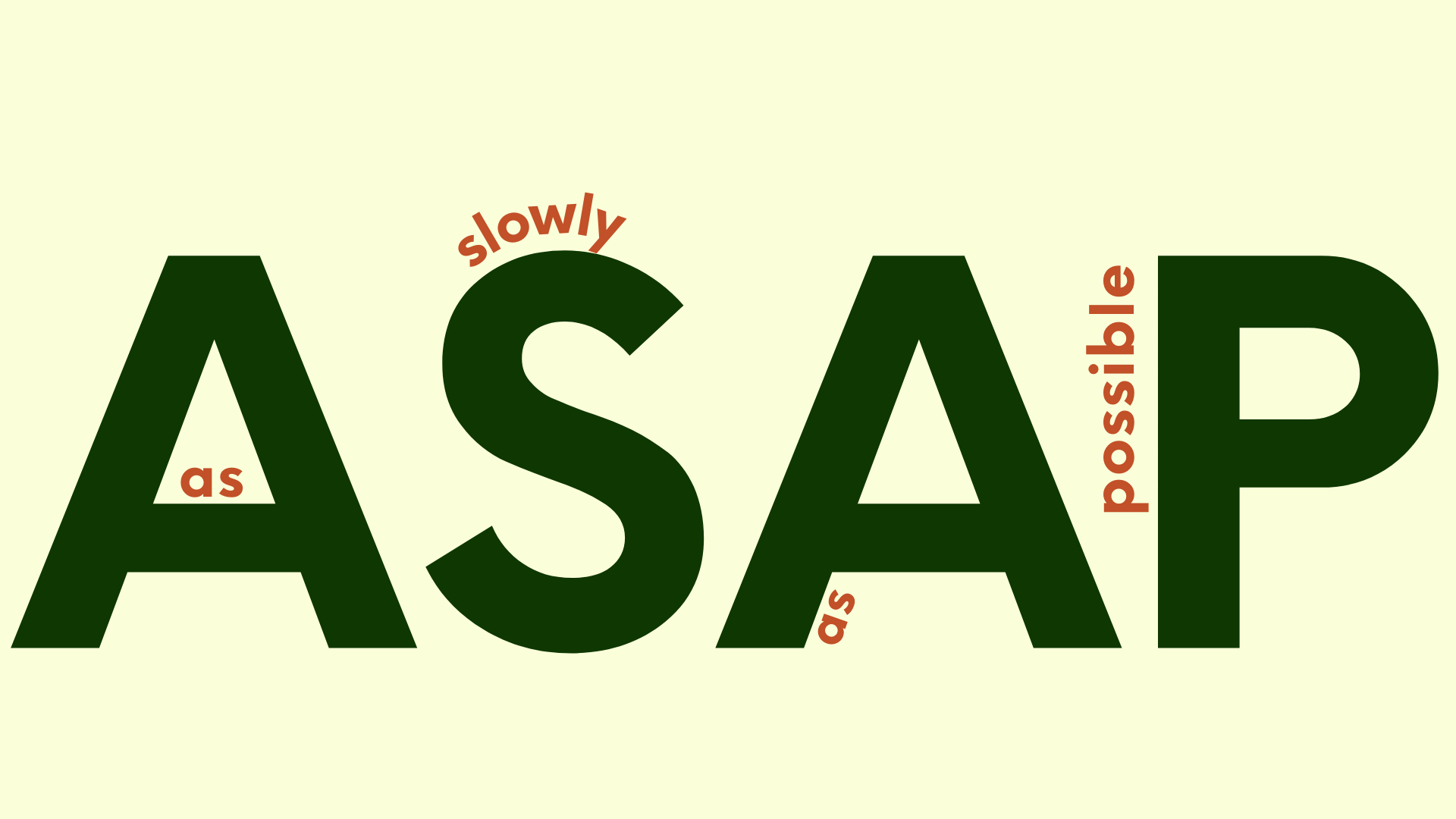
“Here’s my point: the solution to an over-busy life is not more time. It’s to slow down and simplify our lives around what really matters.”
Tip: update your email signature
I’m mid-task when a (1) pops up on my Gmail tab.
Before my brain even registers the notification, I’m typing a response to the email.
PSA: you don’t have to respond to emails right away.
To wipe out any guilt for taking more than a day to reply, you could try having a:
Service level agreement. If someone emails you at 5 pm on a Friday, when do you commit to getting back to them? Is it a 48-hour, 3-working-day or two-week turnaround? Which days of the week do you work?
Notice in your email signature about the days/hours you work. A nice example is: “I work Monday-Thursday, and my working hours might not be the same as yours. Please reply at a time that suits you.”
Out-of-office auto-reply - perhaps with your working hours or service level agreement. For instance, “Thank you for your email! I’ll get back to you within 3 working days.”
5. Prioritising rest
Rest is everything.
Whatever amount you think is enough, rest more.
(Seriously. You need more rest. We all do.)
I say this because I’ve seen what happens when I don’t rest enough.
When I’m a big ball of cortisol and adrenaline, everything starts to feel urgent. Deadlines that aren’t even real suddenly become do-or-die, and I find myself glued to my desk for most of my waking hours.
One of the beautiful things about freelancing is the freedom to rest without asking permission.
But with that freedom comes a challenge: no one’s reminding you to step away.
One of the beautiful things about freelancing is the freedom to rest without asking permission. But with that freedom comes a challenge: no one’s reminding you to step away.
As someone who gets sick a lot, I’ve learned that it’s okay to push a deadline back.
It’s okay to push it back again.
And again.
Obviously it’s better to just agree a timeline that works for you. But when you get sick, there’s no sense in pushing through that. It’s simply not worth it.
Be honest with yourself and your clients from the start.
Set deadlines that reflect how long things actually take, not how long you wish they would.
Try to overestimate - be generous with deadlines for yourself based on actual past performance.
Tracking your time (as best as you possibly can) can be helpful for this!
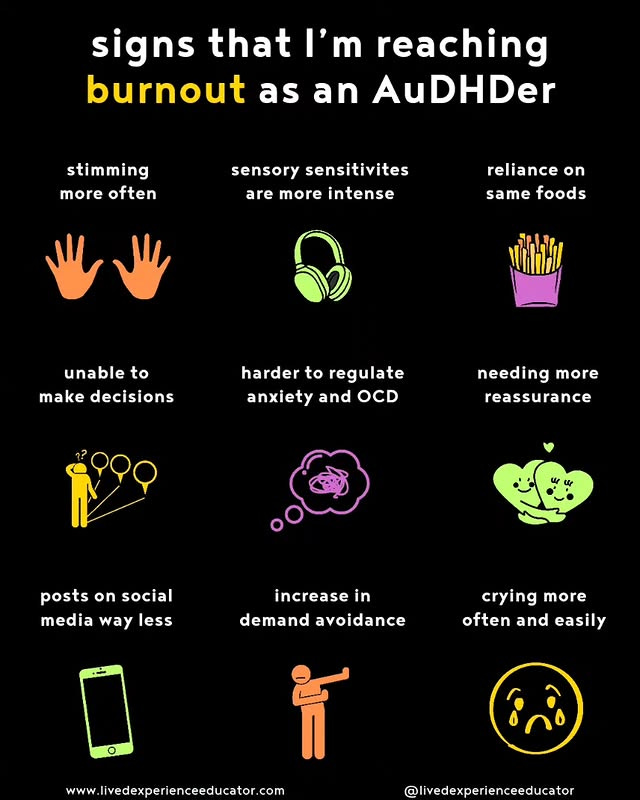
“Rest matters not because it makes you more productive, but because it makes you happier and healthier, less grumpy, and more creative. We think rest matters because you matter. You are not here to be “productive.” You are here to be you, to engage with your Something Larger, to move through the world with confidence and joy. And to do that, you require rest.” - Burnout, Emily & Amelia Nagoski
Tip: build in accountability
Sometimes, the best way to stick to your boundaries is to let someone else hold you to them.
Could you do a skill swap with a friend and ask them to help you stay accountable for taking time off?
Maybe ask a freelance friend to check in with you every now and again (“did you leave your desk at five o’clock like you promised?”).
If you’re more of a systems person, try an annual leave tracker in Notion or your favourite planning tool.
Seeing your time off (or lack of it) in black and white can be a real wake-up call.
Tip: create your own "rest tracker”. I track my days off in Notion.
Tip: don’t sleep on sleep
You probably won’t want to hear this:
Your energy is finite.
(Working late doesn’t create extra hours; you’re borrowing time and energy from tomorrow, next week, and your future wellbeing.)
“You can't accumulate [sleep] debt and then hope to pay it off at a later point during the weekend. If you miss out on sleep, and particularly critical stages or even an entire night of sleep, what you lose during that night you can't get back with recovery sleep.”
- Source
Sleep is non-negotiable - for everyone - but especially if you’re neurodivergent.
Sleep disorders and disruptions are more common for neurodivergent folk, which makes it even more crucial to prioritise rest.
I need nine solid hours of sleep to function well. Some people thrive on seven or eight, but figuring out how much sleep you need is key.
A simple way to do this? Keep a sleep diary in your phone notes to track:
how many hours you’re getting,
how you feel when you wake up,
your energy levels throughout the day.
Do this for a week or a month, and you’ll start to spot patterns that can help you make more intentional choices.
Working late doesn’t create extra hours; you’re borrowing time and energy from tomorrow, next week, and your future wellbeing.
Recommended book: Why We Sleep by Matthew Walker
Tip: create a wellness action plan
When I was doing CBT for my OCD, one of the most helpful things I learned was how to create an action plan.
We can guarantee that there’ll be bad days. So, it’s important to plan for them before they happen.
(In that moment of crisis, you probably won’t be on top form to think creatively/deeply enough to make a sensible, self-compassionate plan.)
For me, it’s a list of actions to take when it feels like things are spiralling.
It serves as a grounding tool - a way to guide myself back to steadier ground when everything feels shaky.
If you’re not sure where to start, Mind has a fantastic template:
Recommended template: Wellness Action Plan
My friend Sulaiman also told me about a brilliant organisation that runs workshops to help you create your own wellness plan: Lumos Transforms.
Whether you use a template, attend a workshop, or just jot down your own steps, having a plan in place can make all the difference.
Tough days will happen, but with the right tools, you don’t have to face them unprepared.
Tip: check out free events and tools created by Lumos Transforms.
6. Serotonin top-ups
This is going to show how little I know about neuroscience, but bear with me.
The more I learn about serotonin, the more I start to picture a little treat dispenser in my brain. (Scientists everywhere are screaming at me: that’s not how it works!) But this image really works for me. Here’s why.
You can “top it up” by planning small, joyful moments. Like you’re a hamster rewarding yourself for a job well done.
When I wasn’t letting myself enjoy anything during the day, I’d fall into Revenge Bedtime Procrastination.
Staying up late, trying to claw back the free time I’d denied myself.
Now, I allow myself to take proper breaks. Not five-minute stretches, but big, chunky pauses that feel restorative.
Of course, this flexibility is a luxury; I know not everyone can take breaks whenever they want.
Even a small step - like blocking out a slightly longer lunch break or grabbing a moment to meditate in between meetings - can make a huge difference to your mood.
Some of my serotonin top-ups include:
making a “fancy” tea and sipping it slowly (not at my desk)
playing with my dog
listening to music (ideally, something I’d be embarrassed if people knew I liked it).
When you give yourself time for nice things, you’re not being indulgent.
You’re giving your brain what it needs to function, focus, and feel good.
Tip: keep track of your milestones
One of the kindest things you can do is keep track of your milestones.
It’s so easy to forget your wins when you’re wrapped up in the day-to-day.
So, try keeping a running list of your successes. It could be a dedicated notebook, a note on your phone, or even a “Wins” board in Notion.
Revisit it whenever you need a reminder of how far you’ve come.
Whenever you need proof that you’re doing the work, making progress, and growing.
I have a page in Notion called “Milestones” and it tracks every tiny achievement since starting my business (literally since day one. December 2019: started my business!) I have a page in Notion called “Milestones” and it tracks every tiny achievement since starting my business (literally since day one. December 2019: started my business!)
Tip: create a milestone tracker today.
Recommended tools for neurodivergent freelancers
Here are the tools I use daily, to help make life easier:
Notion - for keeping organised/client communications
Fathom - a great notetaker for virtual meetings
Loom - a handy screen recorder for quick tutorials/explanations
Canva Pro - worth it just for the magic background remover)
Llama Life - ADHD paradise
Calendly - this helps me stick to boundaries of only having meetings at certain times/days
Stripe - for managing payments
Manual of Me - to help (me and everyone else) understand how I work best
Scribe - automatically creates step-by-step guides for any process cutting down hours of work to seconds
MyMind - a spot to store, remember and organise
Arc - beautiful browser, minimal distractions
Pomodoro Timer - a handy timer to help you focus
Brain FM - music for “peak productivity”
iPhone shortcuts - for example, at the same time every day my Brain FM automatically opens
Automatic timers - for example, when you open a social media app it starts a 10 min timer
Timers for everything
Oh, and I may be biased, but my sweet sister made a Strong Foundations for Freelancers package - full of brilliant templates (like contracts and tools) to help you get started as a freelancer.
Round-up of tips:
(Go on, take a screenshot!)
Create a morning/evening menu
Create rituals to transition into/out of work mode
Get to know your capacity
Find how/where/when you work best (bonus points: share your findings with others!)
Learn how you process
Understand your sensory needs
Create a “Manual of Me”
Update your email signature (so you don’t feel like an immediate response is paramount)
Make your workstation ergonomic
Drink your water!
Learn about your health
Learn about stress and how it shows up in your body
Build in accountability to make sure you’re taking breaks
Don’t sleep on sleep
Create a wellness action plan
Keep track of your wins/milestones
What have I missed?
What works for you?
I’d love to know how your run your business or life in a way that works for your neurodivergent brain. Hit reply to let me know!
Will you be the Bold Type in 2025?
I’m beyond excited to be running Bold Type again 21 January - 15 April!
Over 12 weeks we’ll learn the core principles of inclusive language, how to be a more accessible communicator, and lots more…
Will you join us?
You might also enjoy reading:


If you’re not prone to burnout, this might sound dramatic. If you’re like me, you’ll know that it’s a constant struggle not to get seriously ill.
Please don’t take these tips as prescriptive. You might find inspiration here, you might not. Everyone is different, so try the bits that sound best for your brain.
Can I get my AuDHD diagnosis now please?
My galaxy light was a magical present from the inspiring Hannah Litt. If you need a DEI consultant or event speaker, hire her!
My Rest Deck was a restorative present from the brilliant Sulaiman Khan. If you need a Disability Justice consultant or event speaker, hire him!
PDA is when something is required of us, which then makes us less capable of doing it.
Casper ter Kuile, author of The Power of Ritual: Turning Everyday Activities into Soulful Practices distinguishes between habits and rituals. He says: “A habit is patterned behaviour with an obvious purpose, like brushing your teeth. A ritual is patterned, and it represents something. It gives outer expression to an inner change of state.”
I don’t just mean 5 minutes of scrolling. I like to have 30 minutes of screen-free time, going for a stroll around the block and eating a tasty sandwich.
Everyone stims to some degree, but neurodivergent people, particularly autistic people and ADHDers tend to do it most.
There’s so much research about how women and people of colour get massively underdiagnosed with various forms of neurodivergence - as well as facing completely different consequences when they express their neurodivergence.
Side note: neurodivergent people are often hypermobile, and it's thought that hypermobility extends to our digestive tract and to the tissues around that. So, we're often losing water through our stomach linings.
This is an amazing post. I kept scrolling and the wisdom just kept piling up. Thank you Ettie!
LOTS of amazing info here, thanks for much Ettie <3