



How do you make people care about inclusivity/accessibility?
7 actionable steps to get people on board

Hi friend,
A question landed in my Instagram DMs last week.1
It’s been swirling around my head ever since:
How do you *make* people care about inclusivity and accessibility?
For some of us, caring about others’ needs and safety feels obvious. It’s just a basic workplace expectation.
But we're constantly fighting to prove why it matters. Now more than ever.
Last month, Donald Trump returned to the USA’s White House.
Dismantling diversity, equity, and inclusion (DEI) efforts at the federal level was one of his first moves:
He directed that all federal DEI staff be placed on leave and federal DEI programmes shut down.
The White House website no longer has a Spanish-language version, or its disclaimer promising to make it accessible to people with disabilities.
Several federal agencies have quietly wiped web pages related to reproductive rights and diversity.
Companies like Walmart and Ford Motor Co. have started rolling back their diversity efforts, including commitments to stop participating in Pride parades and diversity surveys.
Amazon was also caught removing mentions of DEI, Black people, and LGBTQ+ people from its “Policy Positions” page. McDonald’s announced it would retire its “Supply Chain’s Mutual Commitment to DEI”.
(These changes are devastating. But also, please don’t panic. There is plenty to feel hopeful about. Many companies are maintaining or increasing their commitment to DEI. It’s disturbing how many influential companies are rolling back, but they’re not the whole picture).

The answer is simple
You don’t make people care about inclusivity/accessibility.
You shouldn’t have to, either.
We shouldn’t have to plead for inclusion as if it’s a business strategy - having to perform for and educate our oppressors, bargaining for a budget line.
(“Please could you oppress us less? It might save you money!”)
We shouldn’t have to dress it up in talk of better staff retention, boosted productivity, or improved morale. The real reason inclusivity matters? Because people deserve to exist in spaces without being harmed.
Marginalised folks shouldn’t have to justify their humanity.
We shouldn’t have to dress it up in talk of better staff retention, boosted productivity, or improved morale.
The real reason inclusivity matters? Because people deserve to exist in spaces without being harmed.
It really is that simple.
That said, if you’re in a position where you have the:
privilege,
energy,
and ability
To encourage decision-makers to take action, here are 7 ways you can approach it.
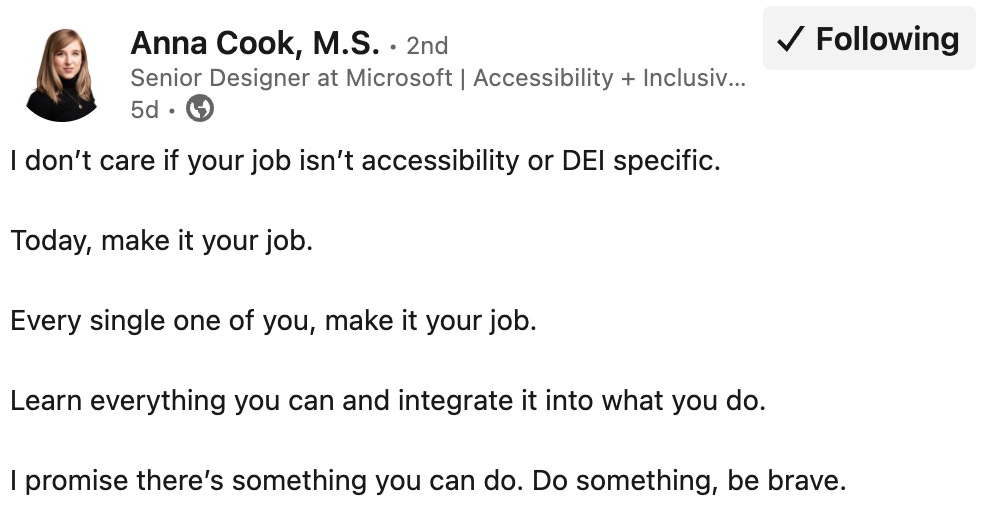
These tips are for influencing the well-intentioned people. Maybe it’s a manager who definitely doesn’t want to be ableist or exclude neurodivergent individuals, but they’re not sure where to start. Maybe they’re worried about getting things “wrong”, so they’re stuck doing… nothing.
How to encourage people to take action
We need to make inclusive and accessible communications feel:
a) less daunting, and
b) less judgemental
Here’s how I think you can do that.
Keep reading with a 7-day free trial
Subscribe to Fighting Talk to keep reading this post and get 7 days of free access to the full post archives.